
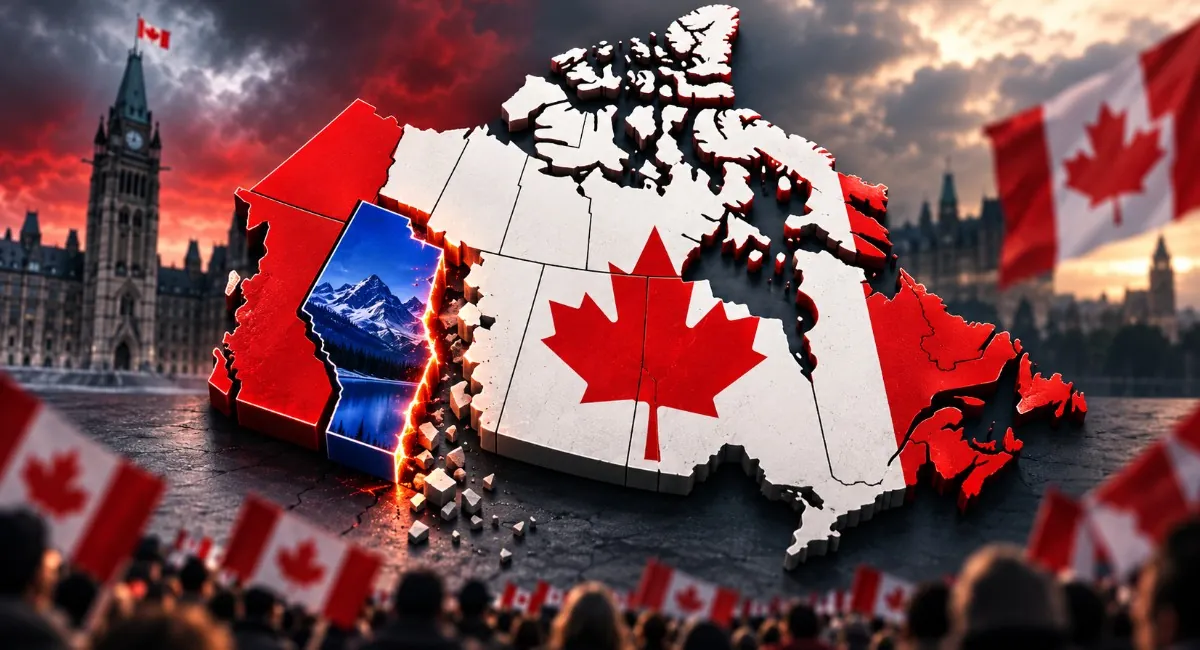
Alberta is voting on its future in Canada today, October 19, 2026, but the numbers suggest its independence movement has a much bigger audience than its actual proposal.
For months, separatists have argued that Canada’s oil-rich western province would be better off governing itself. They have organized rallies, collected signatures and persuaded the provincial government to put the issue before voters.
Now comes the difficult part. Most Albertans do not appear interested in leaving.
A new Ipsos survey found that 70% of residents intend to vote for Alberta to remain in Canada. Only 23% support beginning the process toward a future independence referendum, with another 7% undecided or not planning to vote.
And yet the separatists have already accomplished something significant. A question once associated with the political fringe is appearing on a province-wide ballot, with more than 1.35 million people voting before election day even began.
As Reuters reported, the movement’s leaders are looking past an expected defeat. Losing the referendum may not mean losing their political influence.
Most Albertans Want to Stay, and the Polls Are Not Particularly Close
The latest Ipsos referendum survey, conducted October 13 to 16 among 801 adults, found a commanding lead for remaining in Canada.
Support for beginning the independence process was somewhat higher outside Calgary and Edmonton, but separatists remained in the minority.
How Albertans Plan to Vote
Ipsos survey, October 13-16, 2026
| Remain in Canada |
|
70% |
| Begin Separation Process |
|
23% |
| Undecided / Not Voting |
|
7% |
Source: Ipsos for Global News. Sample of 801 Alberta adults.
Figures represent reported voting intentions, not actual referendum results.
Bars use a common 0% to 100% scale.
There is another complication for the independence campaign. Some people who support holding a future vote do not necessarily want Alberta to become an independent country.
An Angus Reid Institute survey, conducted October 13 to 15 among 1,010 Albertans, found that 66% favored remaining in Canada and 34% supported starting the legal process toward a binding referendum.
Among those supporting the process, 60% said their motivation was primarily to send Ottawa a message. Just 37% identified actually achieving independence as their main goal.
A vote for the separatist option, therefore, is not necessarily a vote for an independent Alberta. For some people, it is a way to express frustration with the federal government.
Alberta Has Been Angry With Ottawa for Decades
Alberta produces much of Canada’s oil and has built a substantial part of its economy around energy exports. The industry supports jobs, government revenues and major trade relationships with the United States.
That dependence on oil has also created repeated disputes with federal governments, particularly over environmental regulation and pipeline development.
Many conservatives in Alberta believe Ottawa has restricted the province’s economic opportunities while benefiting from the wealth generated by its natural resources.
The independence movement draws on those grievances, but its recent growth also owes something to the pandemic.
According to Associated Press reporting on the separatist movement, opposition to COVID-era restrictions helped bring new activists into provincial politics. Some of those networks later turned toward independence.
The result is a movement containing people with very different ambitions. Some want a separate country. Others want Alberta to gain greater control over its taxes, resources and political decisions without actually leaving Canada.
Even the Premier Who Called the Vote Wants Alberta to Stay
Alberta Premier Danielle Smith is in an awkward position.
Her government made the referendum possible, yet she has said she personally favors remaining in Canada.
Smith leads the United Conservative Party, where separatist activists have become increasingly influential. Allowing a public vote gave those members a chance to make their case without requiring the premier to endorse independence herself.
Canadian Prime Minister Mark Carney has taken the opposite approach. He has campaigned openly for national unity, returning to the province where he grew up to urge voters to reject the separation process.
The Associated Press election-day coverage describes a prime minister trying to secure a convincing victory for Canada rather than simply defeating the referendum proposal by a narrow margin.
A decisive result would strengthen Carney’s position. A large separatist minority, however, could leave Smith facing more pressure from within her own party.
More Than 1.35 Million People Voted Before Election Day
The independence question has generated extraordinary participation, even among people opposed to separation.
Elections Alberta reported on October 18 that 1,356,873 advance and special ballots had been cast, representing 43.1% of the 3,148,343 eligible electors.
During Alberta’s 2023 provincial election, advance and special ballots represented 27.5% of eligible voters. The rules for special ballots were not identical, so the figures are not directly comparable in every respect.
Early Voting Participation in Alberta
Advance and special ballots as a share of eligible electors
| 2026 Referendum |
|
43.1% |
| 2023 Election |
|
27.5% |
Source: Elections Alberta. Percentages use all eligible electors as the denominator.
Changes to special ballot eligibility limit direct comparisons between the two events.
Bars use a common 0% to 100% scale.
High participation does not indicate which side is winning. It does show how seriously Albertans are taking the choice.
Leaving Canada Would Be Far More Complicated Than Winning a Vote
Monday’s referendum does not ask Albertans to declare independence immediately.
The official ballot question asks voters to choose between remaining in Canada and beginning the constitutional process required for a future binding referendum on separation.
Even if the second option wins, Alberta cannot simply announce that it has become a new country.
Canada’s constitutional framework would require negotiations involving the federal government and other parties. Questions surrounding national debt, citizenship, borders, pensions, military responsibilities and international trade would have to be addressed.
Indigenous treaty rights create another major obstacle. First Nations leaders have challenged the idea that Alberta could separate without respecting agreements made with the Crown and the rights of Indigenous peoples.
Alberta’s economic relationship with the United States would also require serious attention. Oil pipelines cross international boundaries, and the province relies heavily on access to American refineries and customers.
Independence supporters argue that those relationships could continue under new agreements. Such arrangements would require negotiations rather than being guaranteed by a provincial referendum.
What to Expect After the Referendum?
Voting places close at 8 p.m. local time on October 19. According to Elections Alberta’s published schedule, unofficial results will be counted after polls close, with the count to be completed within 48 hours. Official results are scheduled for October 29.
A victory for remaining in Canada would reject the proposal to begin the constitutional separation process. It would not erase the complaints that brought the issue to a referendum.
In the Angus Reid survey, 62% of respondents believed the separatist movement would never disappear. Only 24% disagreed.
That finding gives today’s vote its most interesting consequence. A clear majority appears ready to reject the separatist proposal, yet many voters expect the argument to continue.
Alberta may be nowhere near becoming an independent country. But Ottawa could still spend years dealing with a province whose separatists have learned how to turn political frustration into an organized campaign.